
How Digital Assets Operate: Understanding the Systems Behind Digital Value
- Crypto9D
- March 5, 2026
Digital assets have moved from niche internet experiments to core components of today’s financial and technological infrastructure. What began with early cryptocurrencies has expanded into tokenized property, digital identity systems, decentralized finance platforms, and blockchain-based applications that operate without traditional intermediaries.
Yet despite growing adoption, many people still ask a basic question: how do digital assets actually work?
To answer that properly, we need to look beneath the headlines and price charts. Digital assets function through a combination of distributed ledger technology, advanced cryptography, economic incentives, and programmable software. Together, these elements create systems that allow value to be stored, transferred, and verified online without relying on centralized authorities.
Let’s explore how this works in a clear and practical way. For more detailed learning, check out our related resources below.
Key Takeaways
1. Blockchain: The Record-Keeping Backbone
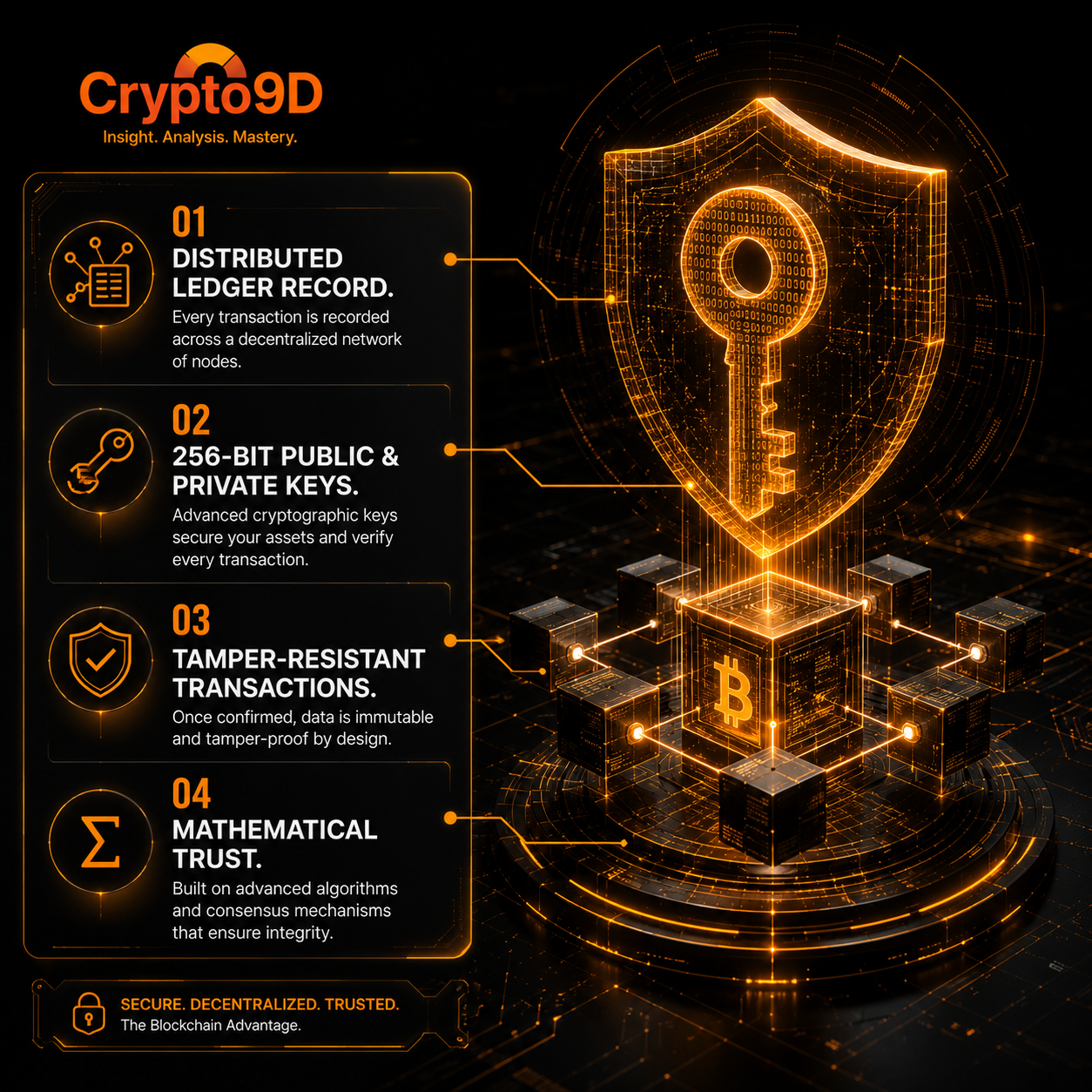
Most digital assets rely on blockchain technology. A blockchain is essentially a shared digital record book that exists across a network of computers rather than on one central server.
Instead of a bank maintaining a private ledger of transactions, thousands of independent computers maintain synchronized copies of the same transaction history. Every participant in the network can verify activity, but no single party controls the entire system.
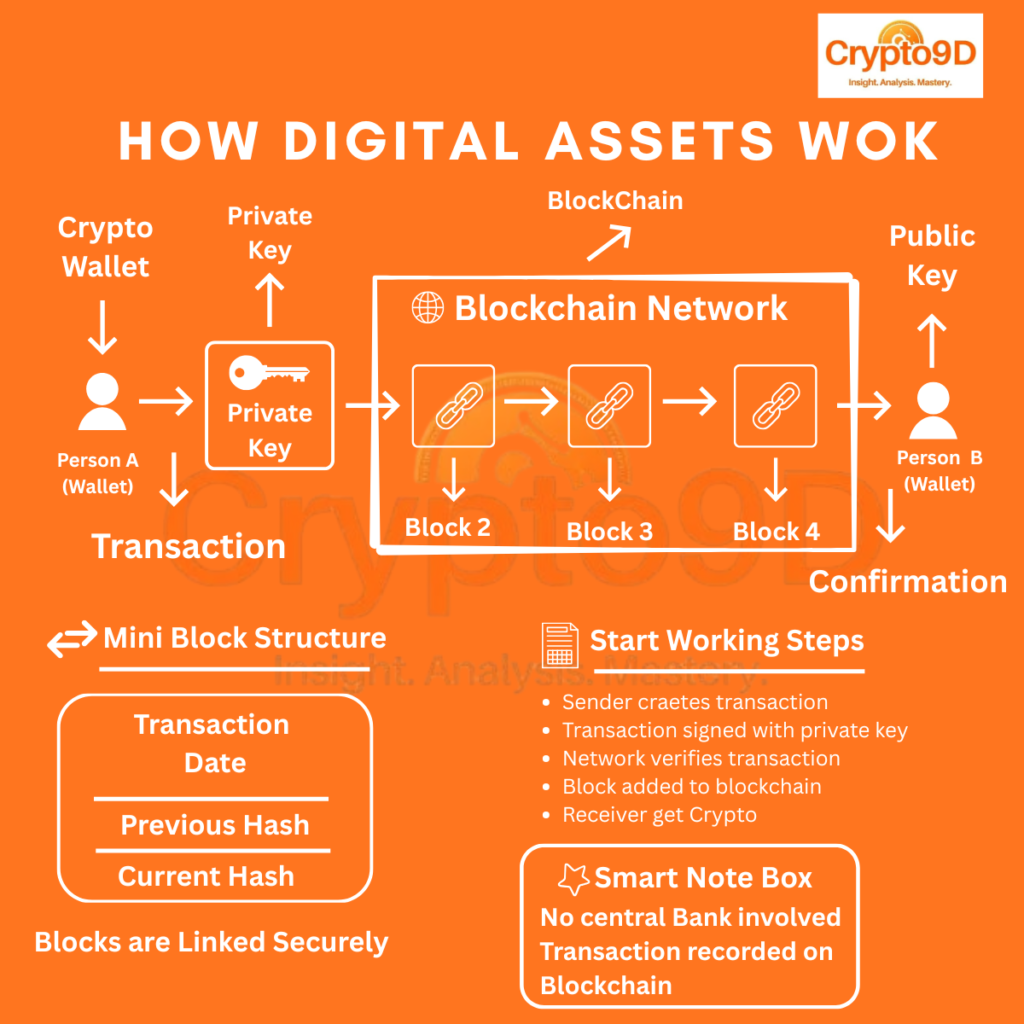
Here’s a simplified explanation of the process:
- Someone initiates a transaction (for example, sending cryptocurrency to another person).
- The transaction is broadcast over the network.
- Network participants verify that the transaction is legitimate.
- Verified transactions form a block.
- It is appended to a series of earlier blocks.
- The updated record is shared across the entire network.
Because each block is linked cryptographically to the previous one, altering historical data would require rewriting the majority of the network’s copies simultaneously. In large networks, this is extraordinarily difficult and expensive to attempt.
This structure creates transparency, durability, and tamper resistance without depending on a central authority. Learn more about Bitcoin’s blockchain.
2. Cryptography: Proving Ownership Digitally
The security of digital assets depends heavily on public key cryptography.
Each user controls two mathematically connected keys:
- A public key – An openly accessible identifier
- A private key – which must remain confidential
The private key acts as proof of ownership. When someone wants to transfer a digital asset, they use their private key to digitally sign the transaction. The network then checks that signature using the corresponding public key.
This procedure guarantees:
- Only the rightful owner can authorize transfers
- Transactions cannot be forged
- Identity does not need to be publicly revealed
Modern systems use extremely large encryption standards (often 256-bit), making brute-force attempts to guess private keys computationally unrealistic with today’s technology.
In effect, mathematical rules replace institutional trust. Interested in learning more? Check our crypto learning module.
3. Decentralization: Distributing Authority
Traditional systems depend on central organizations. Banks settle payments. Governments issue currency. Registrars maintain land records.
Digital asset networks distribute these responsibilities across participants.
In decentralized networks such as Bitcoin, no single organization controls transaction approval. Independent participants verify and record activity according to pre-defined rules embedded in the protocol.
This design provides several structural advantages:
- Reduced dependence on intermediaries
- Increased global accessibility
- Resistance to single points of failure
- More transparency
However, decentralization does not eliminate governance. Many networks still evolve through community consensus, developer proposals, and stakeholder voting mechanisms.
4. Network Security: Mining and Staking
Digital asset networks must be protected from manipulation. To achieve this, they use economic incentive systems.
Proof of Work
In networks like Bitcoin, security is maintained through a system known as Proof-of-Work.
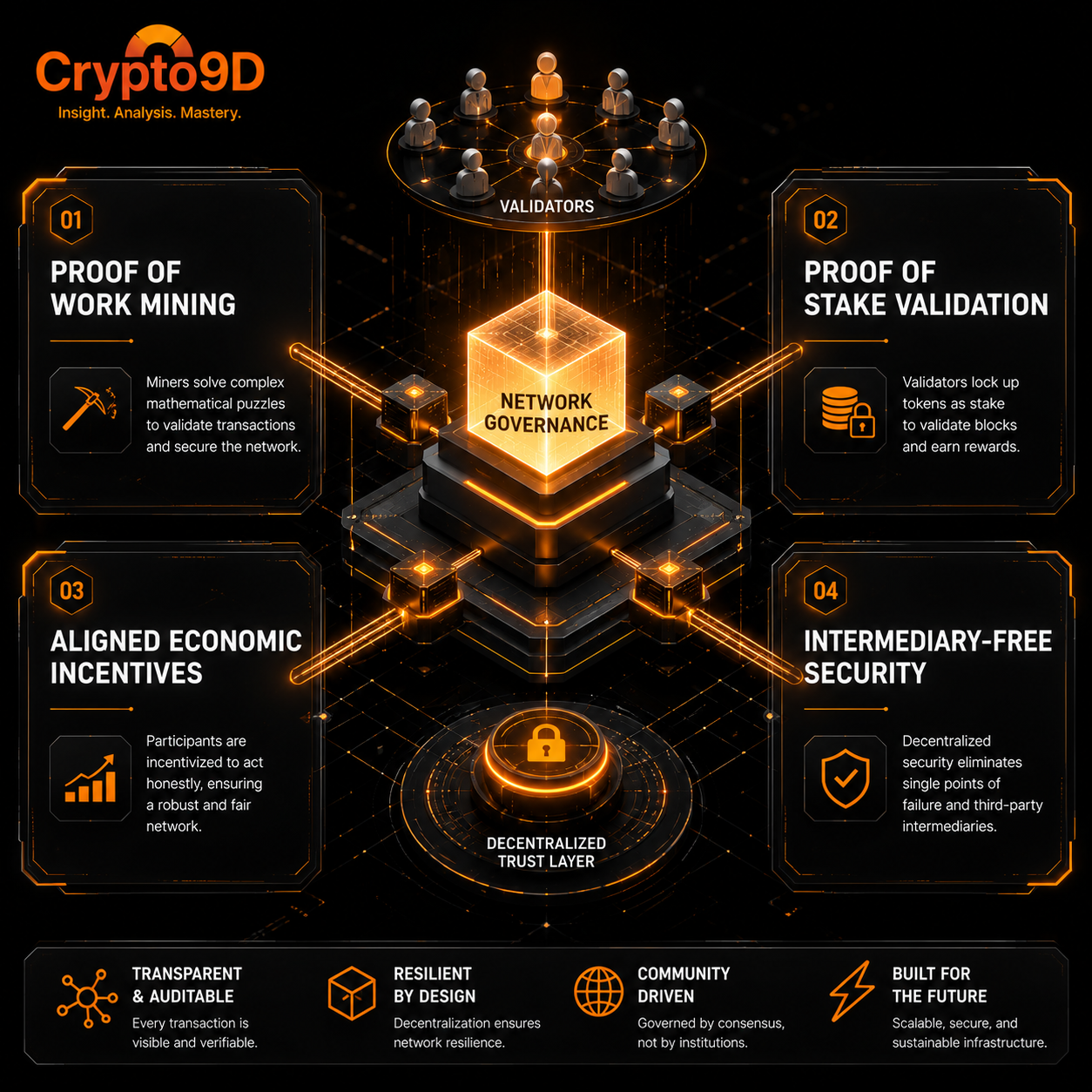
Participants called miners compete to solve complex mathematical puzzles. The first to solve the puzzle validates the next block of transactions and earns newly created cryptocurrency as a reward.
This process requires significant computational power and electricity, making attacks financially impractical. Attempting to alter the ledger would cost more than the potential reward. Learn more about Proof of Work.
Proof of Stake
Other networks, including Ethereum after its upgrade, use Proof-of-Stake.
Instead of expending computing power, validators lock up (or “stake”) their own tokens as collateral. If they act dishonestly, they risk losing part of their stake. Read more about Proof of Stake.
Both systems align economic incentives with honest behavior, ensuring that participants benefit more from securing the network than attacking it.
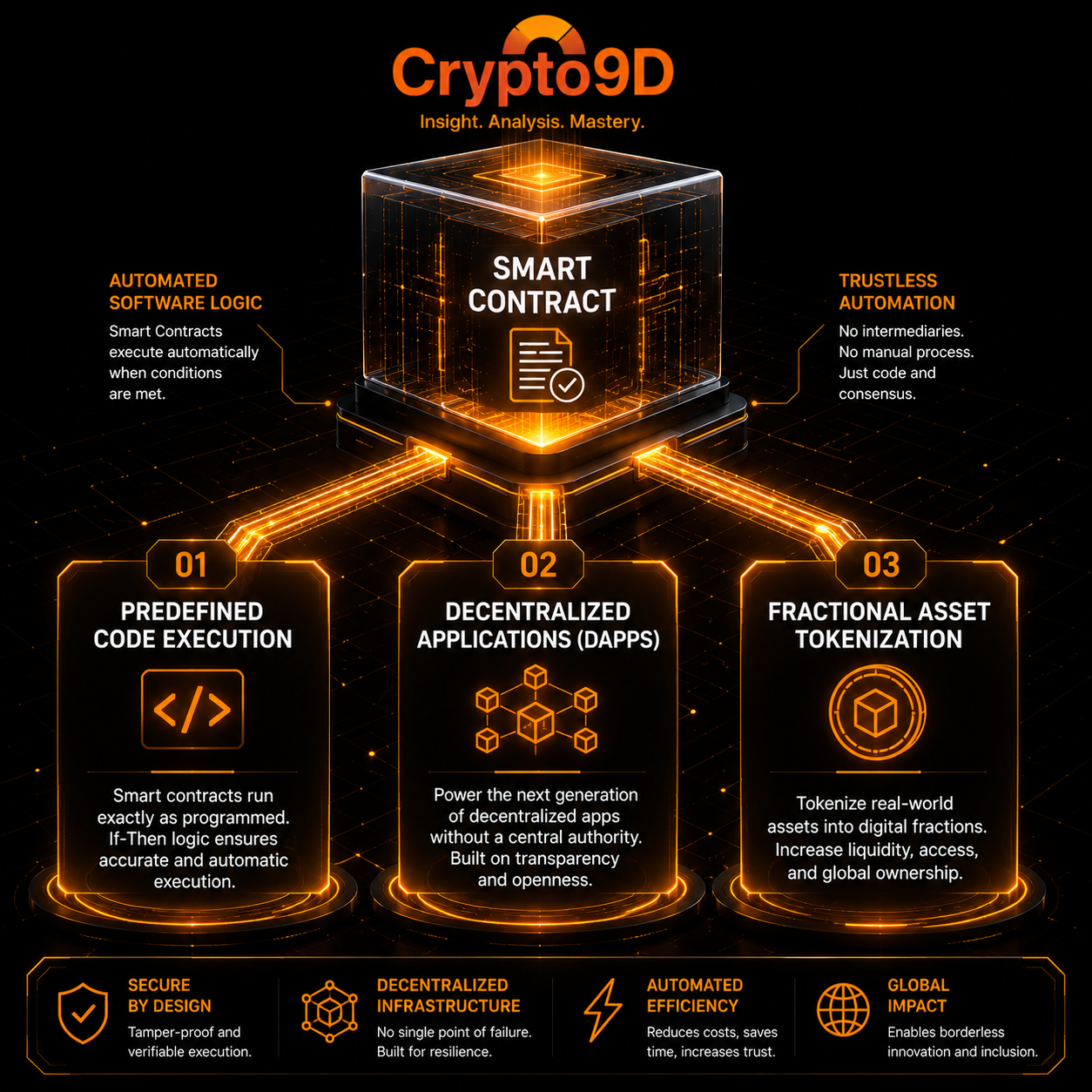
5. Smart Contracts: Code That Executes Automatically
One of the most transformative elements of digital assets is the smart contract.
A smart contract is software stored on a blockchain that automatically executes predefined instructions when conditions are met.
For example:
- A rental agreement could automatically release payment once terms are fulfilled.
- Insurance coverage could trigger compensation when verified data confirms an event.
- Music royalties could be distributed instantly upon resale.
- Property ownership shares could be divided and transferred digitally.
On programmable platforms like Ethereum, smart contracts allow developers to build decentralized applications (DApps). These applications operate without centralized servers and often without traditional corporate intermediaries.
By embedding rules directly into code, smart contracts reduce manual oversight, speed up processes, and increase transparency.
6. Tokens: Digitizing Ownership and Rights
Many digital assets exist in the form of tokens.
A token can represent:
- A unit of digital currency
- Availability of a service
- Voting rights in a network
- Ownership of physical property
- Digital versions of collectibles
- Credentials for identity
Tokenization converts value or rights into programmable digital units that can be transferred and tracked on a blockchain.
For example, a building could be divided into digital shares. Investors could purchase fractional ownership, receive income proportionally, and trade their shares in secondary markets.
This model increases market access and liquidity, allowing smaller investors to participate in asset classes that were once restricted.
7. Digital Wallets: Managing Access
Digital assets are accessed through digital wallets. Contrary to popular belief, wallets do not store the assets themselves; they store the private keys that grant access to assets recorded on the blockchain.
Wallets generally fall into two categories:
- Hot wallets (internet-connected)
- Offline storage devices, or cold wallets
Security depends entirely on safeguarding private keys. If a key is lost, access to the asset is permanently lost. If it is stolen, the asset can be transferred irreversibly.
This structure gives users full control, but also full responsibility.
8. Market Structure and Liquidity
Unlike traditional stock markets, digital asset markets operate continuously. Trading happens 24 hours a day, across global exchanges like Coinbase, Kraken, Binance, and Bybit
Prices fluctuate based on:
- Demand and supply
- Regulatory announcements
- Technological updates
- Macroeconomic trends
- Adoption levels
Some digital assets have capped or predictable supply schedules. For instance, the maximum supply of Bitcoin is 21 million coins.
This limited supply contrasts with fiat currencies, which can be expanded by central banks to manage economic conditions.
Because the market is still evolving, price volatility remains common.
9. Regulation and Institutional Participation
In their early stages, digital assets operated largely outside traditional regulatory systems. Over time, governments introduced clearer frameworks to address investor protection, taxation, and compliance. The SEC and FCA have become key regulators.
Institutional involvement has increased through:
- Regulated investment vehicles
- Custodial services
- Infrastructure improvements
However, regulatory approaches vary globally and continue to evolve.
10. Risks in Operation
While digital assets offer structural advantages, they also present risks:
- Volatility: Price fluctuates sharply.
- Cybersecurity vulnerabilities: Most breaches occur at exchanges or wallet providers, not on core blockchains.
- Regulatory shifts: Legal changes can affect utility and access.
- Governance disputes: Protocol upgrades sometimes create network splits.
- Adoption uncertainty: Long-term value depends on real-world utility.
Understanding these factors is part of understanding how digital assets function in practice.

User Case:
Alice wants to send 0.5 Bitcoin to Bob. Instead of going through a bank, the transaction is recorded on the Bitcoin blockchain, a decentralized ledger. Miners validate the transaction, update the ledger, and Bob sees the funds in his wallet within minutes. The system ensures security, transparency, and trust without relying on a central authority.
Conclusion: A New Infrastructure for Digital Ownership
Digital assets operate through a combination of distributed record-keeping, cryptographic verification, economic incentives, and automated software logic.
Rather than relying on centralized institutions, they depend on:
- Mathematical validation
- Network consensus
- Incentive-driven security
- Transparent transaction histories
From early cryptocurrency systems to advanced smart contract platforms, digital assets have developed into programmable frameworks for transferring and managing value online.
They are more than speculative tools. They represent a shift in how ownership, exchange, and trust can be structured in a digital environment.
As economic activity continues to migrate online, understanding how digital assets operate will be essential for investors, businesses, and policymakers navigating the evolving digital economy.
Want deeper crypto insights that actually matter?
Join Crypto9D and stay informed, prepared, and ahead of the market.
Check Out Our Related Services
Ready to apply what you've learned about Bitcoin? Crypto9D offers expert services to help you navigate the crypto world with confidence:
Crypto Analysis
Get comprehensive analysis – fundamental, quantitative, qualitative, and on-chain – to make informed investment decisions.
Tokenomics Design
Get comprehensive analysis – fundamental, quantitative, qualitative, and on-chain – to make informed investment decisions.
Regulatory Compliance
Navigate complex Web3 regulations and ensure your project operates legally across all jurisdictions.
Crypto Education
Master crypto concepts with bespoke training programs tailored to your experience level.
Related Articles:
Top 10 Promising AI, DePIN & RWA Projects – with High Growth Potential for 2026
- Master the art of crypto scalping in 2026 – See how crypto scalping works
What Is Copy Trading? – How It Works
What Is Bitcoin and How Was It Created? – Bitcoin is the world’s first decentralized digital currency
What Are Crypto Wallets – How They Protect Your Funds
Liquidity in Crypto Trading – What It Means and Why It Matters
What Are ETFs – and How Are They Transforming the Way People Invest?
Top 5 Safest Crypto Exchanges – for Beginners:2026 Comprehensive Guide