
A Guide to Staying Safe in Web3:How to Avoid Common Scams
- Crypto9D
- March 16, 2026
Navigating Web3 in 2026 still feels a bit like riding through the digital Wild West. The opportunities are real in decentralized finance, NFTs, on-chain identity, and permissionless innovation but so are the risks. Unlike traditional platforms, Web3 gives users full ownership of their assets. That freedom is powerful, but it also means you are your own bank, security team, and fraud department.
This Web3 safety guide is designed to help you understand the most common threats, recognize scam patterns early, and take practical steps to protect your crypto, NFTs, and identity. Whether you’re new to Web3 or already active across DeFi and NFTs, staying safe requires constant awareness.
Let’s break it down.
Why Web3 Security Is Different
In Web2, if your account gets hacked, you reset a password. In Web3, if your wallet is compromised, funds are gone permanently. There are no chargebacks, no customer support reversals, and no central authority to fix mistakes.
That’s why crypto scam prevention is less about reacting after the fact and more about avoiding bad interactions entirely.
Common Web3 Scams You Should Know in 2026
1. Common Crypto Phishing Attacks
Phishing remains the #1 threat in Web3.
Attackers impersonate:
- Wallet providers like MetaMask
- NFT marketplaces
- DAO admins
- Influencers or founders
You might receive:
- Fake airdrop links
- “Urgent” security warnings
- Direct messages on X, Discord, or Telegram
Once you connect your wallet or sign a malicious transaction, attackers gain permission to drain assets.
2. Ice Phishing Explained (The Silent Wallet Drainer)
Ice phishing is more dangerous than traditional phishing because nothing looks wrong at first.
Instead of stealing your seed phrase, the scammer tricks you into signing a transaction that grants ongoing access to your assets. The wallet stays intact but approvals quietly allow funds to be transferred later.
Ice phishing explained simply:
- You sign a “harmless” transaction
- The contract gains unlimited spending permissions
- Assets disappear days or weeks later
This is why revoking smart contract permissions is critical (more on that below).
3. Rug Pull Red Flags in DeFi and NFTs
Rug pulls haven’t disappeared but they’ve just become more subtle.
Watch for:
- Anonymous teams with no verifiable history
- Sudden liquidity unlocks
- Overly aggressive marketing and guaranteed returns
- Smart contracts that can be paused or altered unilaterally
In NFTs, rug pulls often show up as:
- Roadmaps that never progress past mint
- Team disappearance after sell-out
- No secondary market support
If something feels rushed or overpromised, trust your instincts.
4. Malicious Smart Contracts
Not all scams look like scams.
Some malicious smart contracts are professionally designed, audited “lightly,” and promoted by influencers who don’t understand the code themselves.
Red flags include:
- Requests for unlimited token approvals
- Contracts deployed very recently
- No public GitHub or incomplete documentation
Always assume smart contracts are permanent once signed.
How to Avoid Web3 Scams (Practical Safety Rules)
1. How to Protect Your Seed Phrase
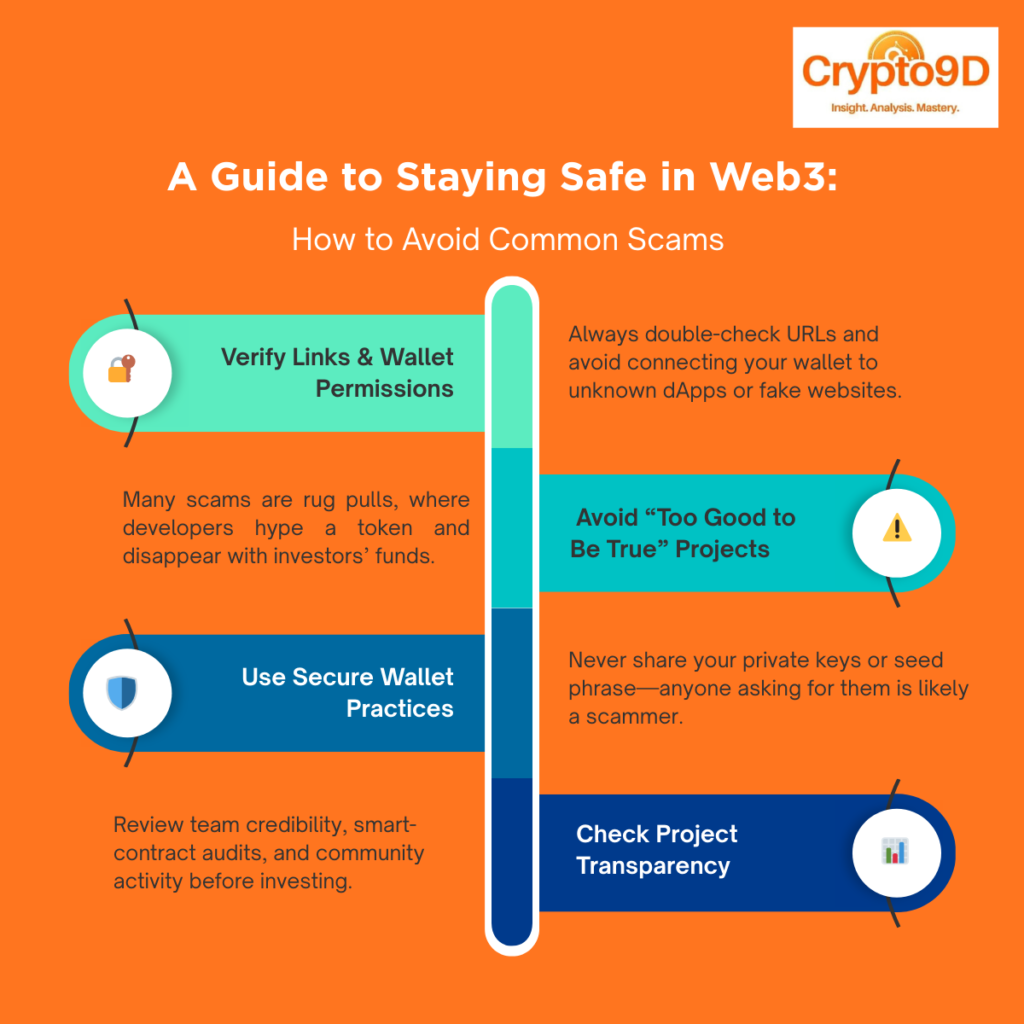
Your seed phrase is your wallet. Anyone with access controls your funds.
Best practices:
- Never store it in screenshots or cloud storage
- Write it on paper or engrave it on metal
- Never enter it into websites or browser popups
- Never share it even with “support”
2. Use Hardware Wallets for Serious Funds
If you’re holding long-term assets, a browser wallet alone isn’t enough.
Using devices like Ledger or Trezor adds a physical confirmation step that blocks most phishing and malware attacks.
This is why best hardware wallets for Web3 security are considered mandatory for serious users in 2026.
3. Always Verify URLs and Sources
Scammers rely on:
- Fake domains
- Look-alike Twitter handles
- Sponsored search results
Bookmark official sites and avoid clicking links from DMs. Even experienced users fall for polished fakes during busy market periods.
4. Learn to Revoke Smart Contract Permissions
One of the most overlooked security steps is revoking smart contract permissions after you’re done using a dApp.
Many wallets allow:
- Viewing active approvals
- Removing unnecessary permissions
This single habit prevents ice phishing damage and limits exposure from old protocols you no longer use.
Signs of a Crypto Giveaway Scam
Crypto giveaway scams are still everywhere in 2026 especially during bull market surges.
Classic signs include:
- “Send 1 ETH, get 2 ETH back”
- Fake livestreams using deepfaked founders
- Comment bots promoting identical wallet addresses
NFT Security Tips That Still Matter
NFTs aren’t just art, they often represent access, identity, and utility.
NFT security tips:
- Use a separate wallet for minting
- Never mint from links sent via DMs
- Check contract addresses manually
- Assume free mints carry risk
If the NFT grants token-gated access, compromising it can expose more than just the image.
Conclusion
Staying safe in Web3 isn’t about paranoia it’s about habits.
The most secure users:
- Move slowly
- Verify everything
- Use separate wallets
- Understand what they’re signing
As Web3 adoption grows, scams will continue to evolve. But the fundamentals of crypto scam prevention remain the same: control your keys, question urgency, and never trade convenience for security.
In the Wild West of Web3, the smartest explorers aren’t fearless but they’re prepared.
Web3 rewards those who stay informed.
Want deeper crypto insights that actually matter?
Join Crypto9D and stay informed, prepared, and ahead of the market.
Related Articles:
Top 10 Promising AI, DePIN & RWA Projects – with High Growth Potential for 2026
- Master the art of crypto scalping in 2026 – See how crypto scalping works
What Is Copy Trading? – How It Works
What Is Bitcoin and How Was It Created? – Bitcoin is the world’s first decentralized digital currency
What Are Crypto Wallets – How They Protect Your Funds
Liquidity in Crypto Trading – What It Means and Why It Matters
What Are ETFs – and How Are They Transforming the Way People Invest?
Top 5 Safest Crypto Exchanges – for Beginners:2026 Comprehensive Guide