
What is the “Mid-Cycle” Correction?: Finding the Button to Stay Ahead
- Crypto9D
- July 10, 2026

Every system, markets, businesses, even personal productivity hits a moment where momentum slows but collapse hasn’t arrived. Growth feels uneven. Signals conflict. Headlines oscillate between optimism and panic. This is not the beginning of the end. It’s something subtler and far more interesting: the mid-cycle correction.
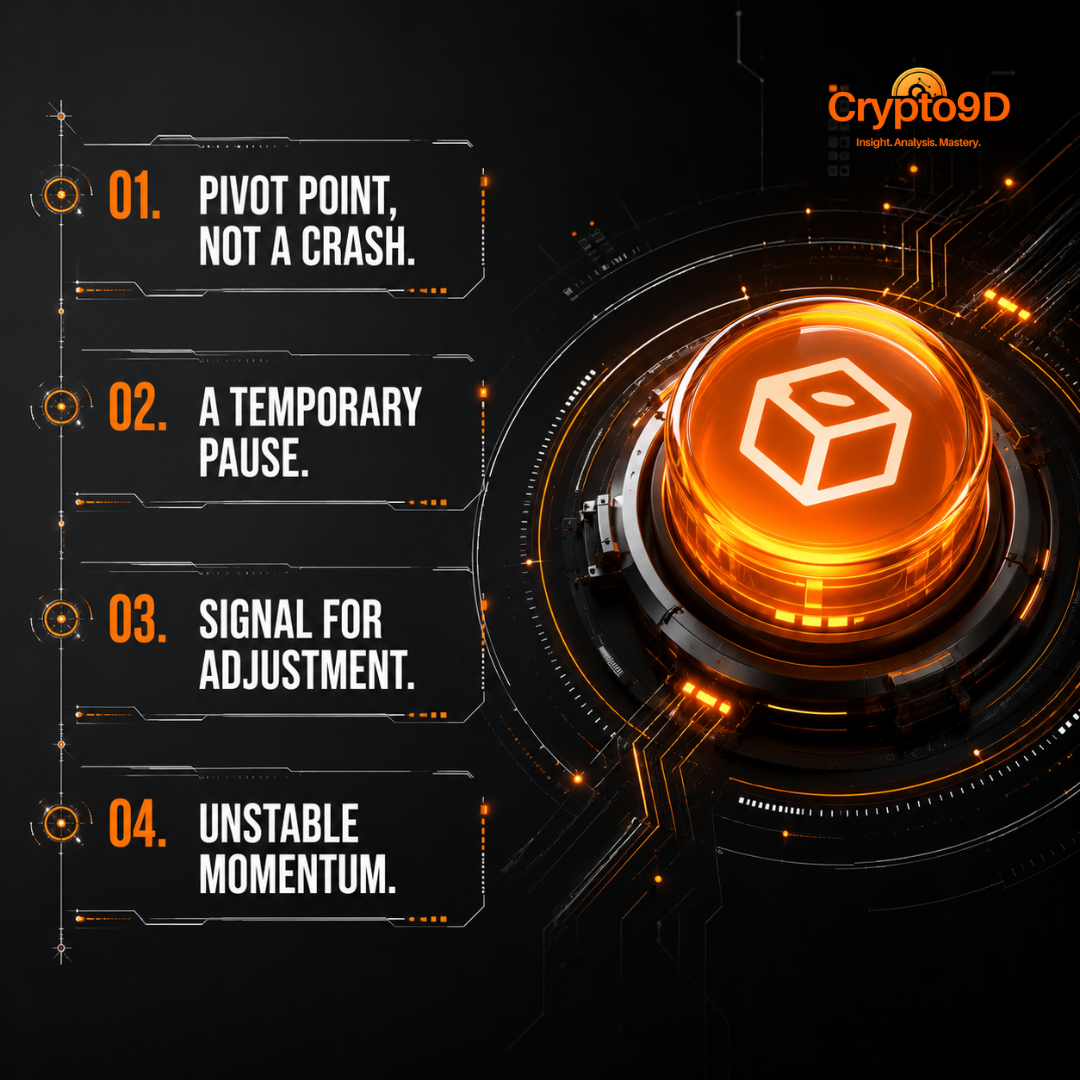
A mid-cycle correction is the pause where adjustment becomes possible. It’s the moment when pushing harder no longer works, but giving up would be premature. The real challenge isn’t surviving the correction but it’s finding the button that realigns direction without breaking the system.
Whether you’re navigating market volatility, responding to monetary policy adjustment, or executing a strategic pivot inside a business or project, the logic is the same. Mid-cycle moments demand clarity, not chaos.
Key Takeaways
What You Will Learn:
✅ Understanding the Mid-Cycle
✅ Soft Landings and Economic Pivots
✅ Growth Strategy

Understanding the Mid-Cycle Correction in Financial Markets
In financial terms, a mid-cycle correction occurs during an ongoing expansion, not at the end of one. Unlike recessions or cycle bottoms, these corrections are marked by uncertainty rather than systemic failure. Growth hasn’t stopped but it has become fragile.
Historically, these moments are often linked to Fed rate cuts or tightening cycles initiated by the Federal Reserve. Such monetary policy adjustments are rarely about crisis response. Instead, they’re designed to fine-tune demand, control inflation, or prevent overheating.
This is where market cycle analysis becomes essential. Investors who mistake mid-cycle turbulence for a full downturn often exit too early, locking in losses. Those who ignore warning signs, however, risk misallocating capital as conditions shift.
Key characteristics of a financial mid-cycle correction include:
- Elevated market volatility without widespread economic contraction
- Sector rotation rather than market-wide collapse
- Increased emphasis on investment risk management
- A growing need for portfolio rebalancing
The button, in this context, isn’t panic-selling but it’s adjustment.
Soft Landings and Economic Pivots
A popular phrase during these periods is the soft landing strategy. The idea is simple: slow growth without stalling it entirely. But executing a soft landing requires more than interest rate tweaks. It requires coordinated economic pivoting across consumers, businesses, and investors.
Mid-cycle corrections are where asset prices recalibrate expectations. Overvalued assets cool down. Defensive positions regain relevance. Smart investors focus on asset allocation mid-cycle, balancing growth exposure with downside protection.
This is also when narratives shift. Instead of chasing peak returns, capital flows toward resilience. The goal becomes staying aligned with the cycle, not fighting it.
Long-term success often depends on understanding questions like:
- How to navigate a mid-cycle market correction without overreacting?
- What does Federal Reserve mid-cycle adjustment history tell us about recovery patterns?
The answers rarely point to drastic moves. They point to deliberate ones.
The Business Parallel: Mid-Project Course Correction
Outside financial markets, the same mid-cycle logic plays out inside organizations.
A product launches successfully, but growth plateaus. A startup scales quickly, then margins tighten. A project meets early milestones, then stalls halfway through. These are moments for mid-project course correction, not reinvention.
In business, the mid-cycle correction shows up as:
- Declining operational efficiency
- Rising complexity without proportional output
- Misalignment between teams, tools, or goals
This is where business agility becomes a competitive advantage. Instead of doubling down on flawed assumptions, high-performing organizations execute a strategic pivot, small enough to manage, large enough to matter.
Importantly, a pivot is not failure. It’s feedback in action.

Finding the Lever: Strategy Over Speed
The temptation during mid-cycle stress is acceleration: more meetings, more features, more spending. But most corrections don’t require more force, they require better leverage.
This is where metaphors like “finding the button” or “finding the lever for business growth” resonate.
The button is rarely obvious. It might be:
- A pricing model adjustment
- A shift in customer focus
- A reduction in scope to improve scalability
Effective leaders focus on performance optimization rather than expansion. They reassess inputs, remove friction, and align resources with the strongest signals.
In project recovery, this often involves:
- Clear change management communication
- Reprioritization of high-impact deliverables
- Targeted project recovery tactics instead of blanket cuts
The goal isn’t to reset the system but it’s to recalibrate it.
Growth Strategy During Mid-Cycle Uncertainty
A strong growth strategy during a mid-cycle correction looks different from one designed for early expansion or late-cycle dominance. It emphasizes durability over speed and clarity over ambition.
In markets, this may mean focusing on quality assets, diversified exposure, and disciplined investment risk management. In business, it means building scalable systems that can absorb shocks without losing direction.
Both worlds converge on the same truth: mid-cycle moments reward those who can adapt without abandoning their thesis.
This is also where many cycles quietly bottom not in dramatic crashes, but in prolonged indecision. Cycle bottoming often begins when pessimism peaks but fundamentals remain intact. Those who recognize this shift early are positioned for the next leg of growth.
Mid-Cycle Uncertainty and Cryptocurrencies:
In the world of cryptocurrencies, mid-cycle corrections are incredibly common, highly volatile, and heavily tied to investor psychology and liquidity.
1. The Mechanics: Total Capitulation vs. Mid-Cycle Shakeout
The primary difference between a true crypto bear market and a mid-cycle correction comes down to the depth of the drop and who is selling:
Bear Markets
Historically, devastating crypto bear markets result in asset drawdowns of 75% to 90% from all-time highs, usually accompanied by total market capitulation (everyone panics and exits).
Mid-Cycle Corrections
These are typically shallower but sharp 20% to 35% pullbacks. They serve to flush out over-leveraged traders and short-term speculators (“weak hands”) while long-term holders (“strong hands”) view the dip as an accumulation zone.
2. On-Chain Data: Tracking the Realized Price
Crypto analysts use specific blockchain metrics to determine whether a drop is just a mid-cycle correction or the beginning of a cold crypto winter. The most critical indicator is the Realized Price (the aggregate average price at which all coins in circulation were last moved/purchased):
In a genuine cycle bottom, the market price breaks below the aggregate realized price.
In a mid-cycle correction, the price drops below the short-term holder cost basis (causing panic among newer buyers) but aggressively holds the line right at or above the long-term holder cost basis or macro realized price support, confirming the structural bull market is still intact.
3. What Triggers a Crypto Mid-Cycle Correction?
While traditional market corrections are driven by corporate earnings or interest rates, crypto mid-cycle resets are catalyzed by a unique mix of factors:
Derivatives Liquidation Cascades
Bull markets cause traders to use high leverage (borrowed capital) to go long. When the price dips even slightly, it triggers automatic liquidations, causing a domino effect that forces the price down rapidly in a matter of hours.
Macroeconomic Shift & Institutional Capital Outflows
In a mid-cycle correction, the price drops below the short-term holder cost basis (causing panic among newer buyers) but aggressively holds the line right at or above the long-term holder cost basis or macro realized price support, confirming the structural bull market is still intact.
Post-Halving "Boring" Phases
Bitcoin operates on a strict 4-year halving cycle. Often, a few months after a halving event, a mid-cycle lull occurs where initial excitement fades, volume thins out, and the market consolidates before supply shock mechanics finally kick in to drive prices higher.
The Button Isn’t Magic, It’s Timing
The most misunderstood aspect of the mid-cycle correction is the belief that there’s a single, dramatic solution. In reality, the button is often a series of small, well-timed decisions.
- Rebalancing instead of exiting
- Pivoting instead of restarting
- Adjusting expectations instead of abandoning goals
Whether you’re managing a portfolio or a company, the correction phase is where discipline compounds.
The systems that survive and eventually outperform, are the ones that treat mid-cycle stress as information, not interruption.

User Case

Conclusion
The mid-cycle correction is not a flaw in the system. It’s proof the system is alive.
Markets need recalibration. Businesses need feedback loops. Projects need checkpoints. The danger isn’t the correction itself but it’s missing the moment to act intelligently.
Finding the button doesn’t mean forcing outcomes. It means understanding the cycle you’re in, recognizing what no longer works, and making the smallest possible adjustment that restores momentum.
In that sense, mid-cycle corrections are less about survival and more about mastery. Those who learn to navigate them don’t just endure cycles but they shape what comes next.
Mid-cycle markets reward clarity, not guesswork.
Frequently Asked Questions
A mid-cycle correction is a temporary slowdown or pullback that occurs during an ongoing expansion, not at the end of one. Unlike a bear market which sees systemic failure and widespread economic contraction, a mid-cycle correction is characterized by elevated market volatility, sector rotation, and fragile growth. In crypto specifically, bear markets cause 75% to 90% drawdowns while mid-cycle corrections typically produce sharper but shallower 20% to 35% pullbacks before the bull market resumes.
Federal Reserve mid-cycle adjustments through rate cuts or tightening cycles are designed to fine-tune demand, control inflation, and prevent economic overheating rather than respond to crisis. These monetary policy adjustments create uncertainty in markets, triggering sector rotation, portfolio rebalancing, and a shift toward investment risk management. Understanding Fed rate cut cycles and their historical recovery patterns is essential for navigating mid-cycle market corrections without overreacting.
Crypto mid-cycle corrections are triggered by three main factors. First, derivatives liquidation cascades occur when over-leveraged traders are automatically liquidated during small price dips, creating a domino effect. Second, macroeconomic shifts and institutional capital outflows from spot Bitcoin and Ether ETFs stall crypto momentum when bond yields spike or capital rotates into other assets. Third, post-halving boring phases create mid-cycle lulls where Bitcoin consolidates before supply shock mechanics drive prices higher again.
A soft landing strategy aims to slow economic growth without stalling it entirely during a mid-cycle correction. It requires coordinated economic pivoting across consumers, businesses, and investors rather than just interest rate tweaks. During mid-cycle corrections, smart investors focus on asset allocation mid-cycle by balancing growth exposure with downside protection, allowing asset prices to recalibrate expectations without triggering a full cycle bottom or recession.
A successful mid-project course correction requires business agility and strategic pivot rather than full reinvention. When growth plateaus, margins tighten, or teams lose alignment during a mid-cycle period, high-performing organizations focus on performance optimization over expansion. This means clear change management communication, reprioritization of high-impact deliverables, and targeted project recovery tactics. Finding the lever for business growth during mid-cycle uncertainty means making the smallest possible adjustment that restores momentum without breaking the existing system.
Find the button. Stay ahead of the cycle.
Crypto9D helps you spot the signal, manage risk, and move at the right moment.
Check Out Our Related Services
Ready to apply what you've learned about Bitcoin? Crypto9D offers expert services to help you navigate the crypto world with confidence:
Crypto Analysis
Get comprehensive analysis – fundamental, quantitative, qualitative, and on-chain – to make informed investment decisions.
Tokenomics Design
Get comprehensive analysis – fundamental, quantitative, qualitative, and on-chain – to make informed investment decisions.
Regulatory Compliance
Navigate complex Web3 regulations and ensure your project operates legally across all jurisdictions.
Crypto Education
Master crypto concepts with bespoke training programs tailored to your experience level.
Related Articles:
Top 10 Promising AI, DePIN & RWA Projects – with High Growth Potential for 2026
Bybit Exchange Review 2026 – Institutional Power for Everyone
- Master the art of crypto scalping in 2026 – See how crypto scalping works
What Is Copy Trading? – How It Works
What Is Bitcoin and How Was It Created? – Bitcoin is the world’s first decentralized digital currency
What Are Crypto Wallets – How They Protect Your Funds
Liquidity in Crypto Trading – What It Means and Why It Matters
What Are ETFs – and How Are They Transforming the Way People Invest?
Top 5 Safest Crypto Exchanges – for Beginners:2026 Comprehensive Guide