What is Tokenization? Process of Tokenization of Real-World Assets and Its Benefits
- Crypto9D
- July 6, 2026
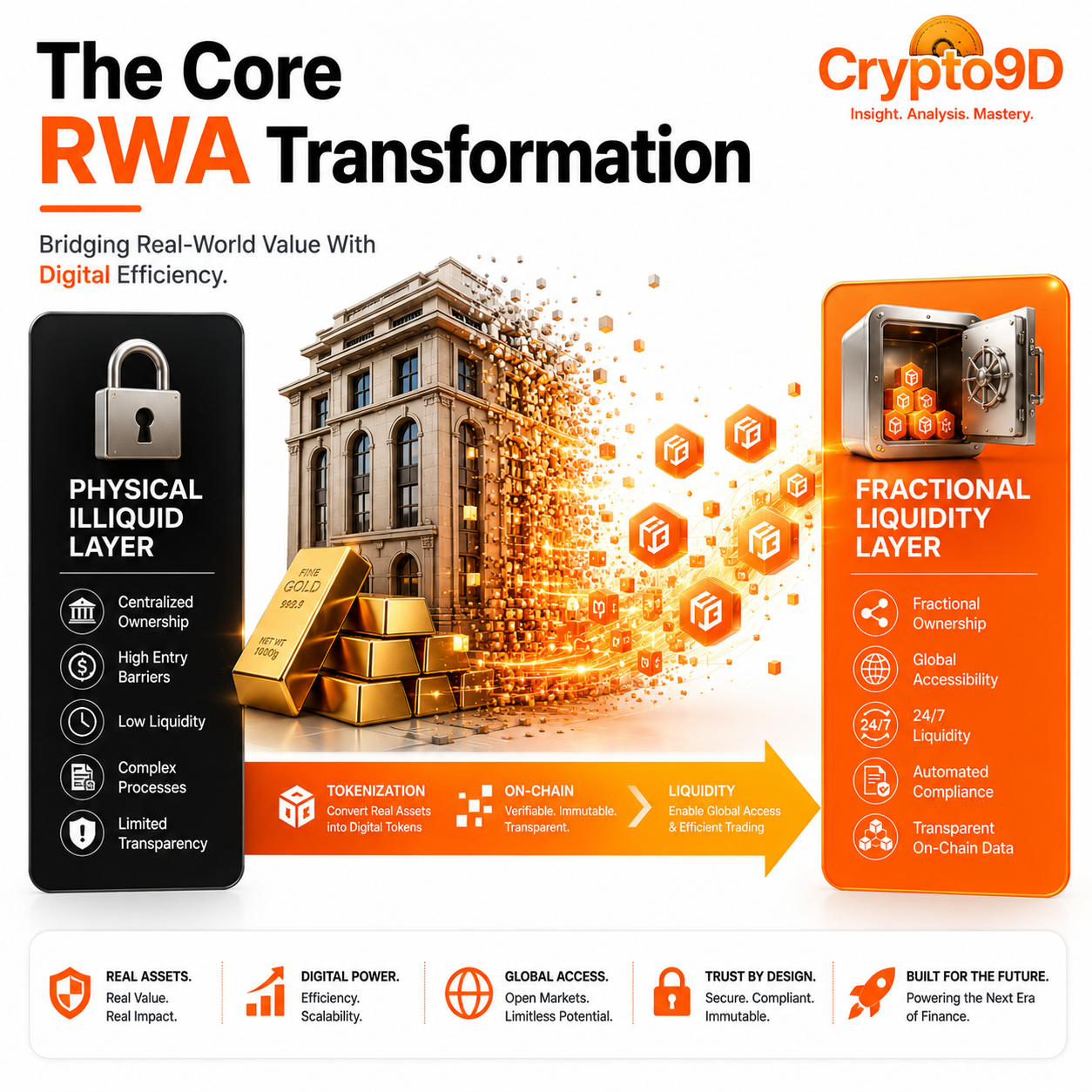
The tokenization of real-world assets (RWA) is transforming how people invest, own, and trade physical and financial assets. By combining traditional asset ownership with blockchain technology, asset tokenization enables fractional ownership, increased liquidity, and transparent digital management of assets that were once difficult to trade.
Key Takeaways
What Is Real-World Asset Tokenization (RWA)?
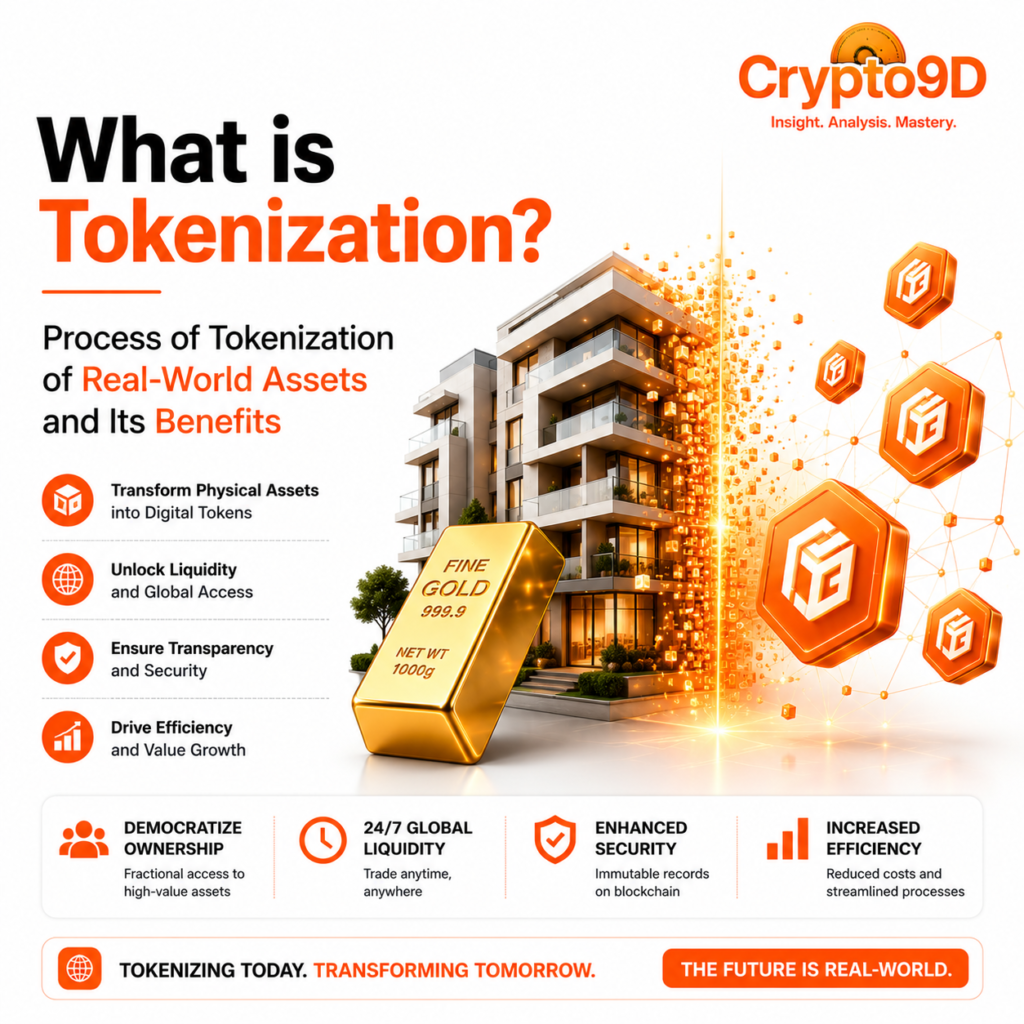
Real-World Asset Tokenization (RWA) is the process of converting physical or off-chain assets such as real estate, commodities, art, or bonds into digital tokens on a blockchain.
Each token represents ownership rights, economic value, or revenue share of the underlying asset. These tokens are often classified as digital securities and may be issued through Security Token Offerings (STOs) under regulatory frameworks.
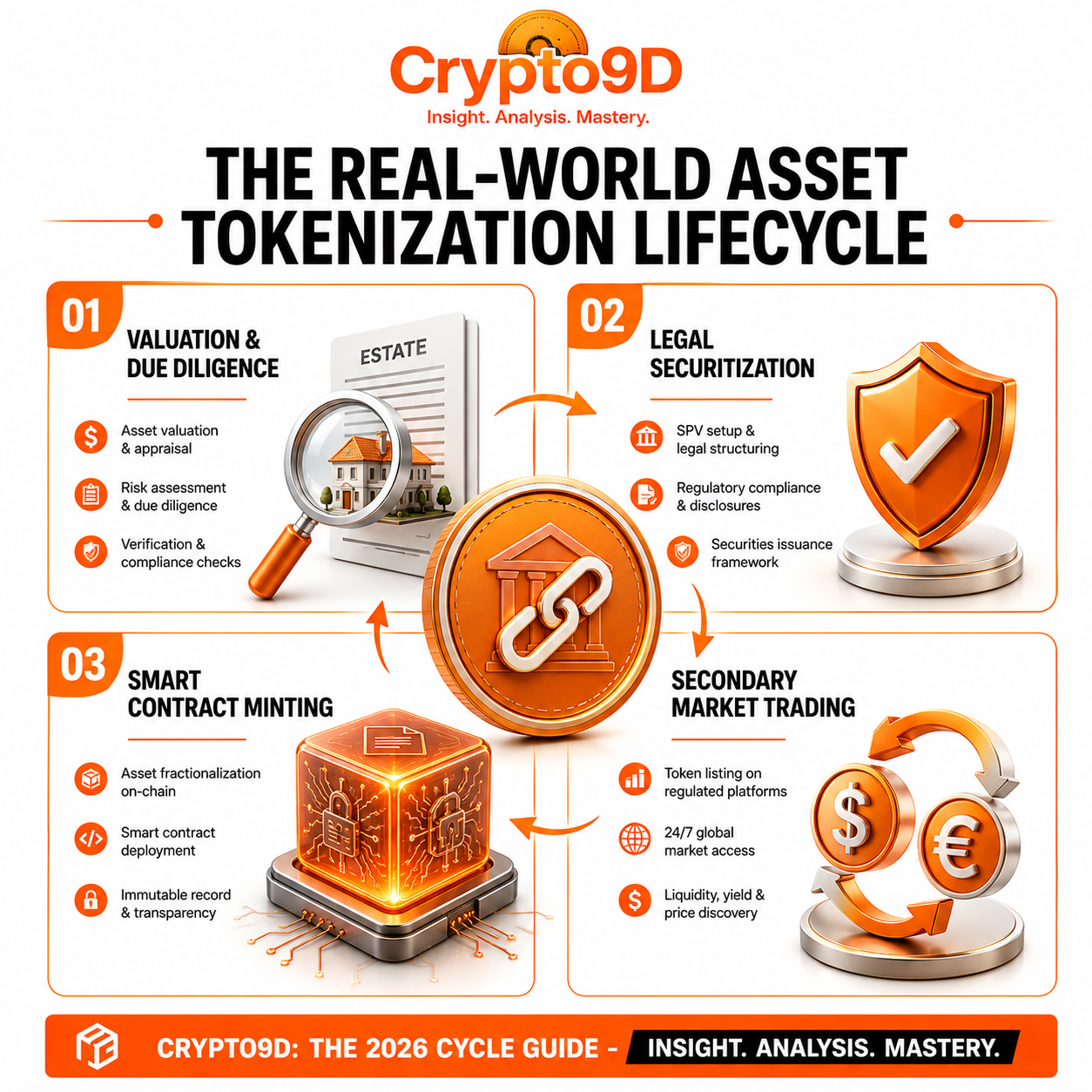
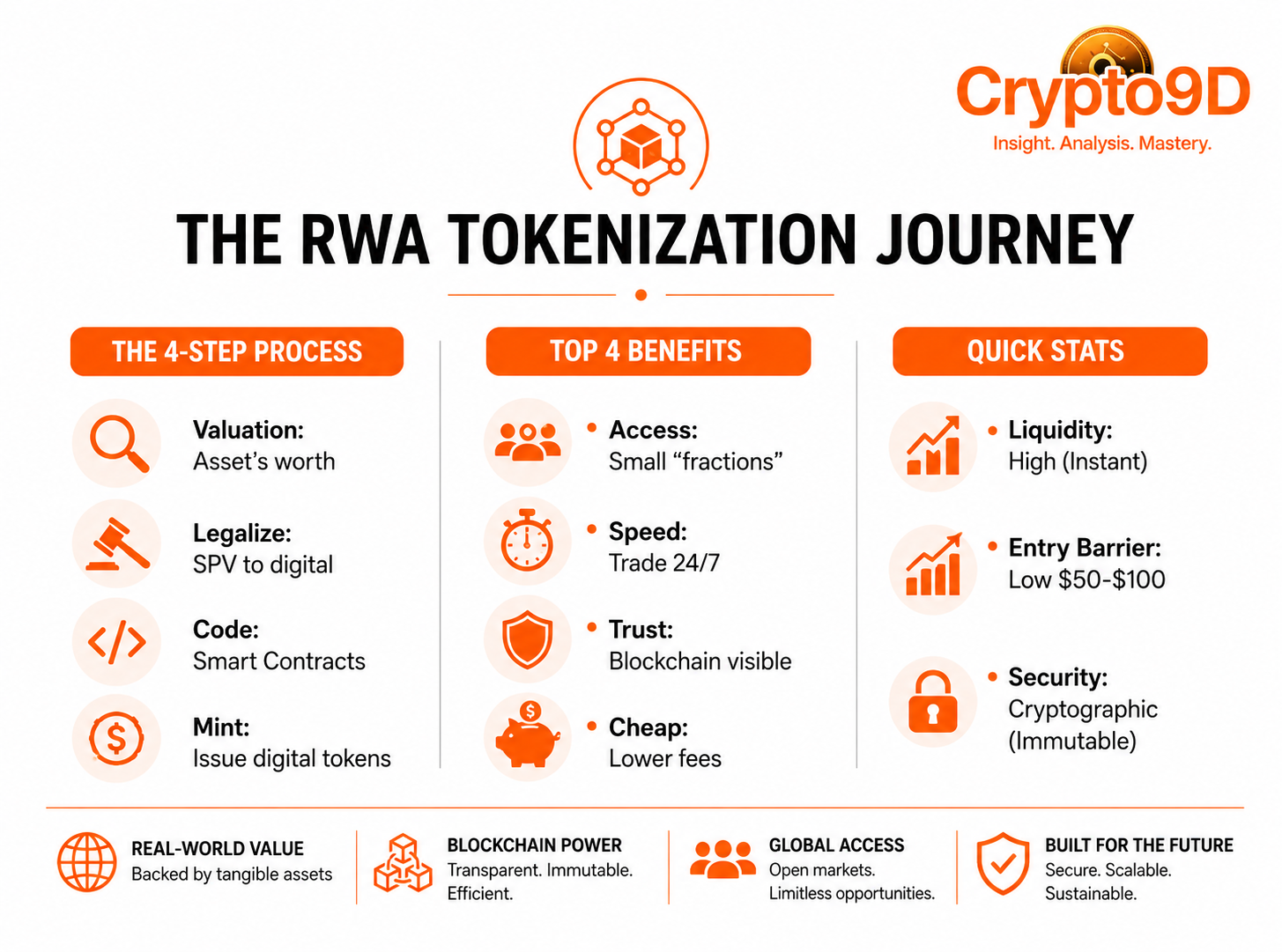
The Process of Tokenization of Real-World Assets
The tokenization workflow follows a structured and legally compliant process to ensure trust, transparency, and security.
Asset Selection
The first step is selecting a suitable real-world asset such as:
- Real estate
- Precious metals (gold, silver)
- Artwork or collectibles
- Private equity or bonds
Assets with high value but low liquidity are ideal candidates for tokenization.
Off-Chain Asset Valuation and Verification
Before token creation, the asset undergoes:
- Professional valuation
- Ownership verification
- Legal due diligence
This step ensures accurate pricing and confirms that the asset can legally be tokenized.
Digital Securitization and Legal Structuring
The asset is placed into a legal structure (such as an SPV or trust) that allows it to be represented digitally.
At this stage, compliance with regulatory requirements for digital securities is critical.
This ensures:
- Investor protection
- Jurisdictional compliance
- Recognition of token holders’ rights
Token Minting on Blockchain
Using a blockchain like Ethereum or Polygon, the asset is converted into asset-backed tokens through smart contracts.
Each token may represent:
- A fraction of ownership
- Profit-sharing rights
- Voting or governance rights
This step enables fractional ownership of assets, making high-value investments accessible to smaller investors.
Smart Contract Asset Management
Smart contract asset management automates:
- Ownership records
- Dividend or yield distribution
- Compliance checks (KYC/AML)
- Transfer restrictions
This automation reduces human error and operational costs while increasing efficiency.
Trading and Secondary Market Access
Once issued, tokenized assets can be:
- Traded on compliant digital marketplaces
- Transferred peer-to-peer
- Managed 24/7 globally
This unlocks liquidity for traditionally illiquid assets like real estate or fine art.
Benefits of Tokenization of Real-World Assets
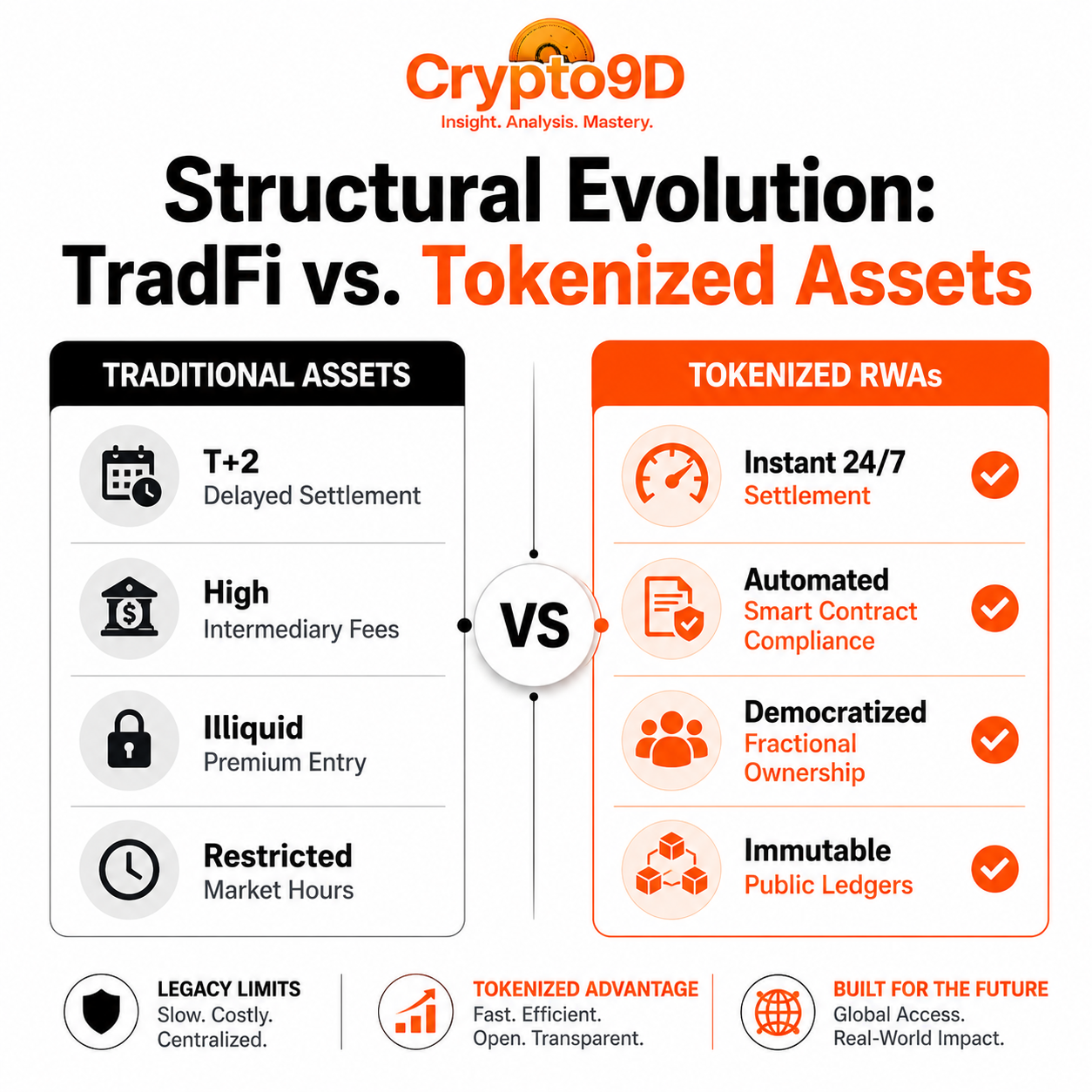
Increased Liquidity for Illiquid Assets
Tokenization allows assets that normally take months to sell to be traded quickly in digital markets, improving capital efficiency.
Fractional Ownership and Accessibility
By enabling fractional ownership, tokenization lowers investment barriers, allowing more participants to invest in premium assets.
Reduced Transaction Costs via Blockchain
Blockchain eliminates many intermediaries, leading to:
- Lower fees
- Faster settlement
- Reduced paperwork
This is a major advantage over traditional asset transactions.
Transparency in Asset Ownership
All transactions and ownership records are stored on a public blockchain, ensuring:
- Immutable records
- Real-time visibility
- Reduced fraud risk
Automated Compliance and Security
Through automated compliance via smart contracts, rules such as investor eligibility and transfer limits are enforced automatically.
24/7 Global Market Access
Unlike traditional markets, tokenized assets can be accessed and traded anytime, anywhere, opening investment opportunities worldwide.
User Case
Latest examples of successful Tokenization:
Real-world asset (RWA) tokenization has completely shifted from experimental pilots to massive, institutional production. The total value of tokenized RWAs on public blockchains has surpassed $24 billion, heavily driven by mega-cap asset managers deploying yield-generating instruments on-chain.
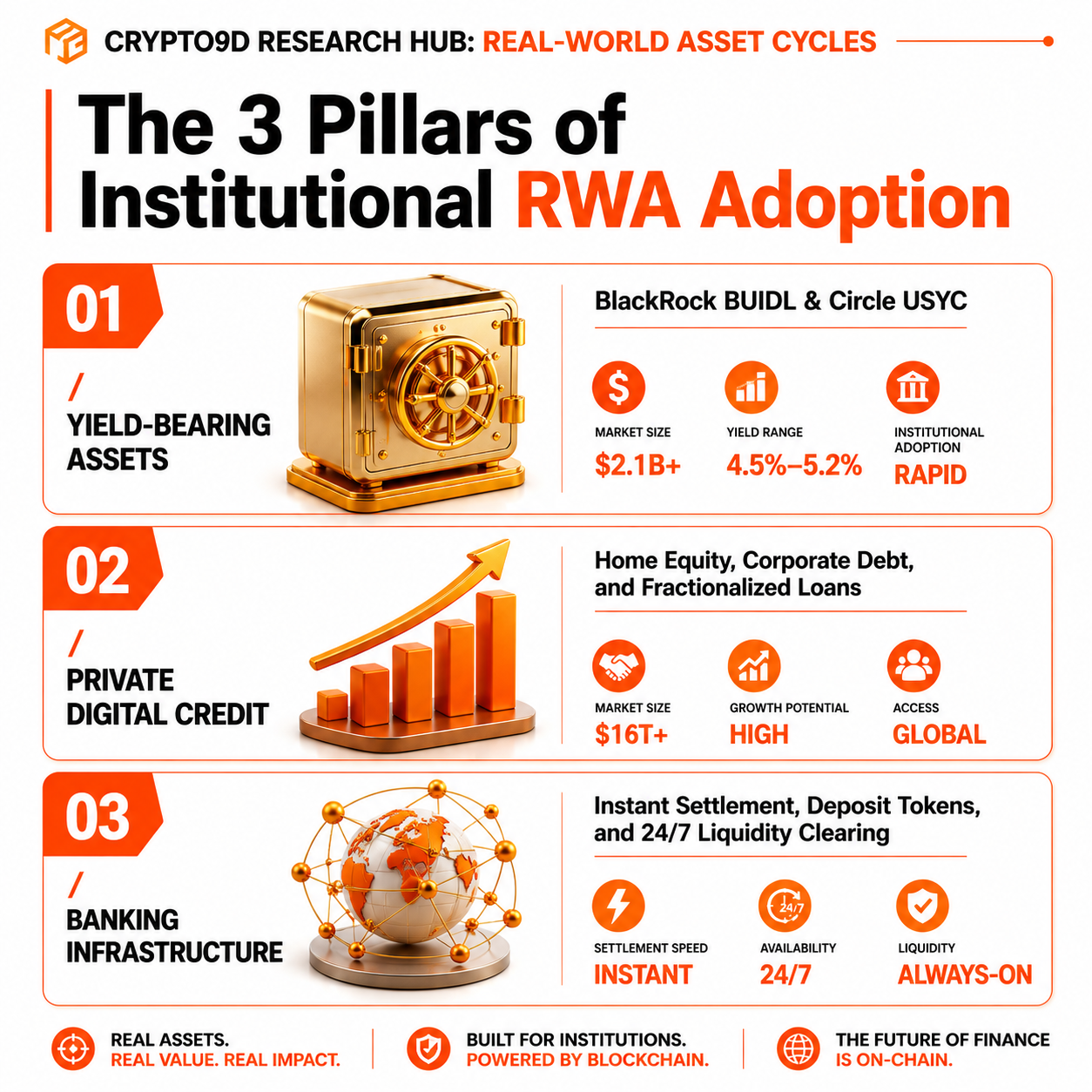
The most successful, high-volume examples dominating the market fall into three main pillars:
1. Tokenized U.S. Treasuries & Money Market Funds (The Volume Leaders)
This is currently the largest and fastest-growing sector, acting as a productive, yield-bearing alternative to standard stablecoins for corporate treasuries and institutional funds.
Circle’s USYC
Overtaking competitors by mid-2026, Circle’s tokenized Treasury product has scaled aggressively to approximately $3 billion in Assets Under Management (AUM).
Launched on Ethereum and now expanded across major networks (Solana, Polygon, Avalanche, Arbitrum, Optimism, Aptos, and BNB Chain), BUIDL sits at over $2.5 billion in value. It recently marked a major milestone by listing for trade on Uniswap, bridging institutional capital directly with decentralized secondary markets.
Franklin Templeton’s BENJI (FOBXX)
As the first U.S.-registered mutual fund to utilize a public blockchain as its official system of record, BENJI has reached $2.47 billion in AUM. Its peer-to-peer transfer volume has surpassed $211 million, backed by distribution on 9 different networks.
2. Private Credit & Tokenized Debt Instruments
Tokenizing loans, home equity, and private corporate credit solves a massive traditional finance (TradFi) pain point: matching buyers and sellers in highly illiquid markets.
Figure Technologies
A massive structural success, Figure has tokenized over $10 billion in loans, including Home Equity Lines of Credit (HELOCs) and mortgage-backed assets. It showcases how fractionalization and smart contracts can drastically speed up origination and settlement.
Centrifuge and Maple Finance
Centrifuge and Maple Finance bridge real-world business credit directly with DeFi liquidity. Centrifuge fractionalizes invoices and bank loans into tradable tokens, while Maple Finance operates institutional cash management pools investing directly into short-term debt, maintaining structural resilience despite shifting macro conditions.
3. Institutional Banking Infrastructure (Deposit Tokens & Interbank Settlement)
Major global banks are moving past blockchain experimentation and embedding tokenized assets into core cross-border payment operations.
JPMorgan and Citi Token
JPMorgan successfully scaled its USD deposit token, JPM Coin, on a public blockchain architecture, while Citi integrated 24/7 USD clearing for real-time cross-border payments. This eliminates traditional T+2 settlement delays, allowing corporate treasurers to move liquidity instantaneously between global subsidiaries.
Hong Kong’s Project Ensemble
Spearheaded by the HKMA, this sandbox has moved into active pilots utilizing tokenized deposits to settle tokenized money market fund transactions and streamline real-time interbank treasury management.
The Future of Investing with RWA Tokenization
The convergence of blockchain technology and traditional finance is reshaping global markets. As regulations mature and infrastructure improves, asset tokenization on blockchain is expected to become a core pillar of modern investing.
From real estate to commodities and private equity, real-world asset tokenization offers a more inclusive, efficient, and transparent financial ecosystem.
Conclusion
The process of tokenization of real-world assets is more than a technical innovation, it’s a financial evolution. By combining legal compliance, smart contracts, and blockchain transparency, RWA tokenization unlocks liquidity, reduces costs, and democratizes asset ownership.
As adoption grows, tokenized assets may redefine how wealth is created and shared in the digital economy.
Frequently Asked Questions
Real-world asset tokenization is the process of converting physical assets like real estate, gold, or bonds into digital tokens on a blockchain. Each token represents ownership rights or economic value of the underlying asset, enabling fractional ownership and 24/7 global trading.
The main benefits of RWA tokenization include increased liquidity for illiquid assets, fractional ownership that lowers investment barriers, reduced transaction costs through blockchain, transparent ownership records, and automated compliance via smart contracts.
The tokenization process involves six steps: selecting the asset, professional valuation and legal verification, digital securitization through an SPV or trust, minting tokens on a blockchain like Ethereum, automating management through smart contracts, and finally trading on compliant digital marketplaces.
Almost any high-value asset can be tokenized including real estate, precious metals like gold and silver, fine art, private equity, bonds, and even home equity loans. Assets with high value but low liquidity benefit the most from RWA tokenization.
Yes. RWA tokenization follows strict legal and regulatory frameworks including KYC and AML compliance enforced through smart contracts. Tokens are often classified as digital securities issued under Security Token Offerings (STOs), ensuring investor protection and jurisdictional compliance.
Explore RWA opportunities on Crypto9D today.
With Crypto9D, you can access secure, compliant, and transparent real-world asset tokenization, from fractional ownership to blockchain-based asset management.
Check Out Our Related Services
Ready to apply what you've learned about Bitcoin? Crypto9D offers expert services to help you navigate the crypto world with confidence:
Crypto Analysis
Get comprehensive analysis – fundamental, quantitative, qualitative, and on-chain – to make informed investment decisions.
Tokenomics Design
Get comprehensive analysis – fundamental, quantitative, qualitative, and on-chain – to make informed investment decisions.
Regulatory Compliance
Navigate complex Web3 regulations and ensure your project operates legally across all jurisdictions.
Crypto Education
Master crypto concepts with bespoke training programs tailored to your experience level.
Related Articles:
Top 10 Promising AI, DePIN & RWA Projects – with High Growth Potential for 2026
- Master the art of crypto scalping in 2026 – See how crypto scalping works
What Is Bitcoin and How Was It Created? – Bitcoin is the world’s first decentralized digital currency
What Are Crypto Wallets – How They Protect Your Funds
How Digital Assets Operate – Understanding the Systems Behind Digital Value
Liquidity in Crypto Trading – What It Means and Why It Matters
What Are ETFs – and How Are They Transforming the Way People Invest?
Top 5 Safest Crypto Exchanges – for Beginners:2026 Comprehensive Guide
Bybit Exchange Review 2026 – Institutional Power for Everyone